2026-05-06
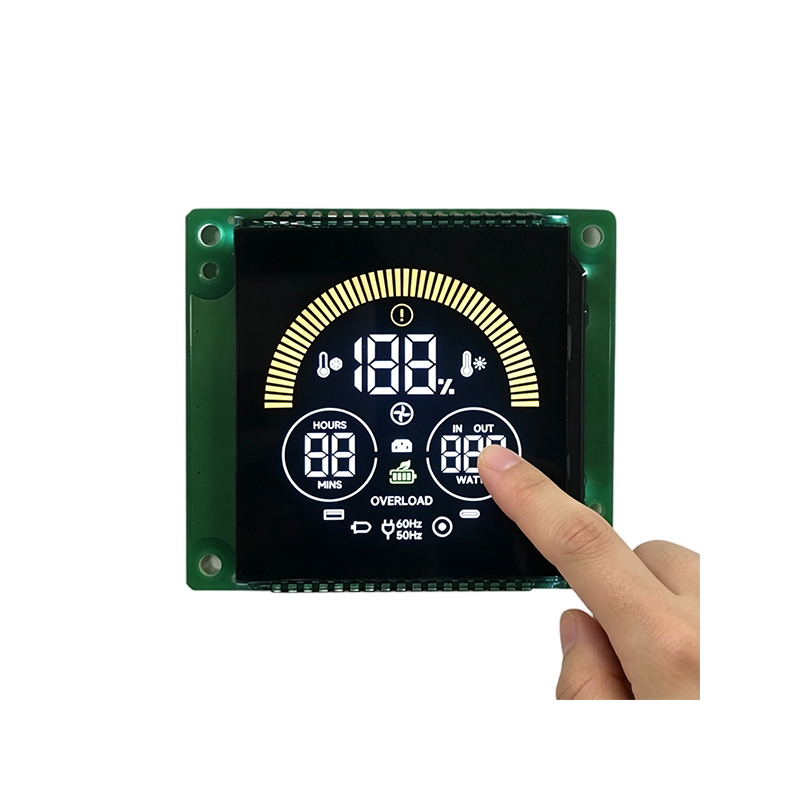
A custom LCD segment display is a specialized liquid crystal screen designed to show specific numbers, symbols, or icons tailored to a device’s unique interface. Unlike generic modules, these displays are engineered for exact dimensional, optical, and electrical requirements, ensuring optimal readability and power efficiency in dedicated applications. This guide explores the types, design processes, and expert insights necessary for integrating high-performance segment solutions into modern electronics.
The core distinction of a custom LCD segment display lies in its bespoke architecture. While standard off-the-shelf displays offer fixed patterns, custom units allow engineers to define every pixelated element. This includes the shape of segments, the arrangement of digits, and the inclusion of proprietary icons or logos directly within the glass substrate.
Industry professionals favor this approach when product differentiation and space constraints are critical. By eliminating unused screen real estate, manufacturers achieve smaller form factors and reduced power consumption. The technology relies on twisted nematic (TN) or super twisted nematic (STN) liquid crystal materials, manipulated to create high-contrast visuals under varying lighting conditions.
Furthermore, customization extends beyond the visual pattern. It encompasses the driver electronics, connector placement, and backlighting systems. This holistic design ensures seamless integration with the host PCB, reducing assembly complexity and enhancing overall system reliability in harsh environments.
Understanding the internal structure is vital for specifying the right component. A typical unit consists of several layered elements working in unison:
Selecting the appropriate technology type is the first step in the design process. The market currently supports several distinct modes, each offering unique advantages depending on the application environment and viewing angle requirements.
TN technology remains the most cost-effective solution for standard indoor applications. These displays typically feature a gray background with black segments (positive mode) or vice versa. They offer fast response times and low power draw, making them ideal for consumer appliances like calculators, clocks, and basic meters.
However, TN panels have limited viewing angles. When viewed from extreme sides or top/bottom positions, contrast degradation occurs. For devices where the user view is fixed and direct, TN provides an excellent balance of performance and affordability.
For applications requiring wider viewing angles and higher contrast, STN is the industry standard. The liquid crystal molecules are twisted at a greater angle than in TN cells, resulting in sharper definition and better stability across different temperatures.
STN displays often appear with a blue or green tint in their natural state but can be compensated to achieve black-on-white or white-on-blue aesthetics. This technology is prevalent in automotive dashboards, industrial control panels, and medical devices where readability is paramount.
The optical mode significantly impacts user experience and power usage. In positive mode, the background is reflective (light), and the segments are dark. This configuration consumes the least power since the backlight is only needed in dark environments, relying on ambient light otherwise.
Conversely, negative mode features a dark background with light segments. This style is often chosen for aesthetic reasons or high-end consumer electronics. However, it generally requires constant backlighting to remain visible, leading to higher energy consumption compared to positive mode equivalents.
Developing a custom LCD segment display involves a structured engineering workflow. Skipping steps in this process can lead to compatibility issues or suboptimal performance. The following stages outline the typical path from initial idea to mass production.
During the layout phase, designers must account for the “pitch” or spacing between segments. If segments are too close, crosstalk may occur, causing adjacent elements to faintly illuminate. Proper isolation gaps are essential for crisp imagery.
Additionally, the choice of connector type influences assembly speed. Options range from traditional pin headers and elastomeric connectors (zebra strips) to modern flex cables and chip-on-glass (COG) configurations. The selection depends on the mating PCB design and automation capabilities of the assembly line.
When evaluating display options, it is crucial to understand how segment LCDs compare to other technologies in specific contexts. The following table highlights key differences to aid in decision-making for embedded projects.
| Feature | Custom Segment LCD | Standard Character LCD | OLED Display |
|---|---|---|---|
| Power Consumption | Extremely Low | Moderate | High (depending on content) |
| Sunlight Readability | Excellent (Reflective) | Good (with backlight off) | Poor (unless very bright) |
| Customization Level | High (Any shape/icon) | Low (Fixed font matrix) | High (Pixel addressable) |
| Lifespan | 10+ Years | 5-7 Years | 3-5 Years (burn-in risk) |
| Temperature Range | Wide (-40°C to +85°C) | Moderate | Limited at extremes |
| Cost at Volume | Very Low | Low | High |
This comparison illustrates why custom LCD segment display units remain dominant in battery-operated and outdoor equipment. Their ability to leverage ambient light eliminates the need for power-hungry backlights, extending device runtime significantly.
Every technology involves trade-offs. Understanding the strengths and weaknesses helps project managers set realistic expectations for stakeholders and end-users.
Despite their benefits, segment displays are not suitable for every scenario. They cannot render complex graphics, videos, or arbitrary text fonts unless pre-defined during the design phase. Changing the displayed information requires hardware changes, unlike programmable graphic screens.
Additionally, the viewing angle, while improved in STN models, is still narrower than IPS LCDs or OLEDs. Color reproduction is also limited; while colored filters exist, they generally produce monochromatic or dual-color outputs rather than full RGB spectra.
The versatility of custom LCD segment display technology has led to its adoption across diverse sectors. Each industry leverages specific attributes of the technology to solve unique challenges.
In washing machines, microwaves, and air conditioners, these displays provide clear status updates and setting controls. The ability to customize icons for specific functions (e.g., “Spin,” “Defrost,” “Eco Mode”) simplifies the user interface, reducing confusion and support calls.
Wearable fitness trackers also utilize ultra-thin segment displays to show step counts and heart rates. The low power profile ensures that users do not need to charge their devices daily, a critical factor for adoption in this category.
Vehicle dashboards rely heavily on custom segment displays for speedometers, fuel gauges, and trip computers. The wide temperature tolerance ensures functionality whether the car is parked in desert heat or winter snow. High contrast ratios guarantee that drivers can read data instantly without distraction.
Public transport ticketing machines and parking meters also benefit from the durability and sunlight readability of these units. They operate reliably outdoors for years with minimal maintenance.
Precision is non-negotiable in medical devices such as glucometers, thermometers, and infusion pumps. Custom segments allow for large, easy-to-read numbers and specific warning symbols. The stability of the display ensures that readings do not drift or fade over time.
In industrial settings, control panels for machinery often face electromagnetic interference (EMI). Segment LCDs, being passive devices, are inherently less susceptible to EMI compared to active emissive displays, ensuring accurate data presentation in noisy factory environments.
Successfully implementing a custom LCD segment display requires more than just technical knowledge; it demands a manufacturing partner with proven expertise, scalable capacity, and a commitment to bespoke engineering. This is where Dalian Eastern Display Co., Ltd. distinguishes itself as a leader in the field.
With two advanced manufacturing facilities located in Dalian and Dongguan, Dalian Eastern Display combines professional production equipment with deep industrial technology to deliver a full range of monochrome LCD screens and modules. The company is particularly dedicated to customization, having successfully designed and manufactured over 10,000 unique products for clients worldwide. Their portfolio spans segment code, character dot matrix, graphic dot matrix LCDs, and TFT displays, serving critical sectors including home appliances, automotive electronics, medical equipment, and industrial instrumentation.
As a qualified supplier to many well-known global manufacturers, Dalian Eastern Display offers comprehensive OEM and ODM services tailored to specific project needs. Their robust annual capacity—producing 50,000 square meters of LCD screens and 10 million LCD display modules along with related electronic components—ensures that projects of any scale, from prototype to mass production, are handled with precision and timeliness. By leveraging their extensive experience, engineers can accelerate their design cycles and secure a reliable supply chain for their custom display requirements.
As we approach 2026, the landscape for custom LCD segment display technology continues to evolve. While new display technologies emerge, the fundamental benefits of segment LCDs ensure their continued relevance in the IoT era.
Modern designs increasingly combine segment displays with low-power microcontrollers and wireless connectivity. This hybrid approach allows devices to remain in deep sleep modes, waking up only to update the display or transmit data. The result is a new generation of smart meters and sensors that balance connectivity with decade-long battery life.
Manufacturers are developing new polarizer films and retardation plates to further enhance contrast ratios and viewing angles. These advancements make segment displays viable for more demanding applications previously reserved for high-end graphic panels. Anti-reflective coatings are also becoming standard to improve outdoor visibility.
Environmental considerations are shaping production methods. There is a growing trend towards RoHS-compliant materials and energy-efficient manufacturing processes. The long lifespan of segment displays inherently reduces electronic waste, aligning with global sustainability goals.
Addressing common queries helps clarify technical doubts and accelerates the selection process for engineers and procurement specialists.
The development cycle usually spans 8 to 12 weeks from final design approval to sample delivery. This includes tooling fabrication, prototype assembly, and testing. Mass production timelines depend on order volume but typically commence shortly after sample validation.
No, the segment pattern is etched onto the glass substrate during the photolithography process. Any changes to the layout require new tooling and a fresh design cycle. Therefore, thorough verification of the artwork before manufacturing is essential.
These displays require an AC voltage signal to prevent electrolysis of the liquid crystal. Most designs use a dedicated LCD driver IC that generates the necessary waveforms. The interface can be simple parallel connections or serial protocols like I2C or SPI, depending on the controller chosen.
Initial costs include non-recurring engineering (NRE) fees for tooling and design. For very low volumes, this can make the per-unit cost high. However, for moderate to high volumes, the amortized tooling cost becomes negligible, offering one of the lowest per-unit prices in the display market.
Common options include side-led LEDs, bottom-mounted LEDs, and electroluminescent (EL) lamps. LEDs offer various colors and long life, while EL provides uniform illumination across the entire surface. The choice depends on the desired brightness, color uniformity, and power budget.
The custom LCD segment display remains an indispensable component for applications prioritizing power efficiency, readability, and cost-effectiveness. Its ability to be tailored to exact functional requirements makes it superior to generic alternatives for dedicated devices ranging from medical tools to automotive dashboards.
For engineers and product managers, the decision to go custom should be driven by volume projections and specific interface needs. If your application requires static or semi-static information display with minimal power draw, this technology offers an unmatched value proposition. The initial investment in design yields significant returns in user experience and operational longevity.
To proceed, evaluate your current interface requirements against the capabilities outlined in this guide. Identify the necessary symbols, environmental constraints, and power budgets. Engaging with a specialized manufacturer like Dalian Eastern Display early in the design phase will ensure that your custom LCD segment display integrates seamlessly, delivering a polished and reliable final product ready for the demands of 2026 and beyond.