2026-05-23
A digital segment display is an electronic visual output device that presents numerical or alphanumeric data using illuminated segments arranged in a specific pattern. Widely used in industrial control panels, consumer electronics, and automotive dashboards, these displays offer high readability and reliability. This 2026 guide explores the types, working principles, and expert insights into selecting the right digital segment display for your specific application needs.
A digital segment display functions by illuminating specific sections, known as segments, to form characters. Unlike full-dot matrix screens, segment displays are optimized for showing fixed formats like numbers, time, or simple status indicators. The core technology relies on controlling individual light sources within a predefined layout.
The most common configuration is the seven-segment layout, capable of displaying digits 0-9 and some letters. More complex variations include fourteen and sixteen-segment displays, which support a fuller alphanumeric range. The illumination source varies by technology, ranging from traditional incandescent bulbs to modern LEDs and LCDs.
Operation involves a decoder driver that converts binary or BCD (Binary Coded Decimal) input signals into the specific segment activation patterns required. This simplicity makes the digital segment display highly efficient for applications where power consumption and clarity are paramount over graphical flexibility.
Over recent years, the industry has shifted significantly from vacuum fluorescent and incandescent technologies toward solid-state solutions. Current mainstream implementations predominantly utilize Light Emitting Diodes (LEDs) due to their longevity and brightness. However, Liquid Crystal Displays (LCDs) remain vital for battery-operated devices where ultra-low power draw is critical.
Expert consensus suggests that while OLED and micro-LED technologies are advancing, the classic segment architecture remains unbeatable for cost-effective, high-contrast numeric readouts in harsh environments. The physical robustness of these units ensures they continue to dominate sectors like heavy machinery and utility metering.
Selecting the correct unit requires understanding the fundamental architectural differences available in the market. Each type offers distinct advantages regarding visibility, power usage, and environmental tolerance. The choice often dictates the overall performance of the end product.
LED-based digital segment displays are the industry standard for applications requiring high brightness and wide viewing angles. They emit their own light, making them perfectly visible in direct sunlight and total darkness without external backlighting.
These displays typically come in common anode or common cathode configurations. The choice between them depends on the driving circuitry design of the host system. Modern LED segments often utilize surface-mount technology (SMT) for compact integration.
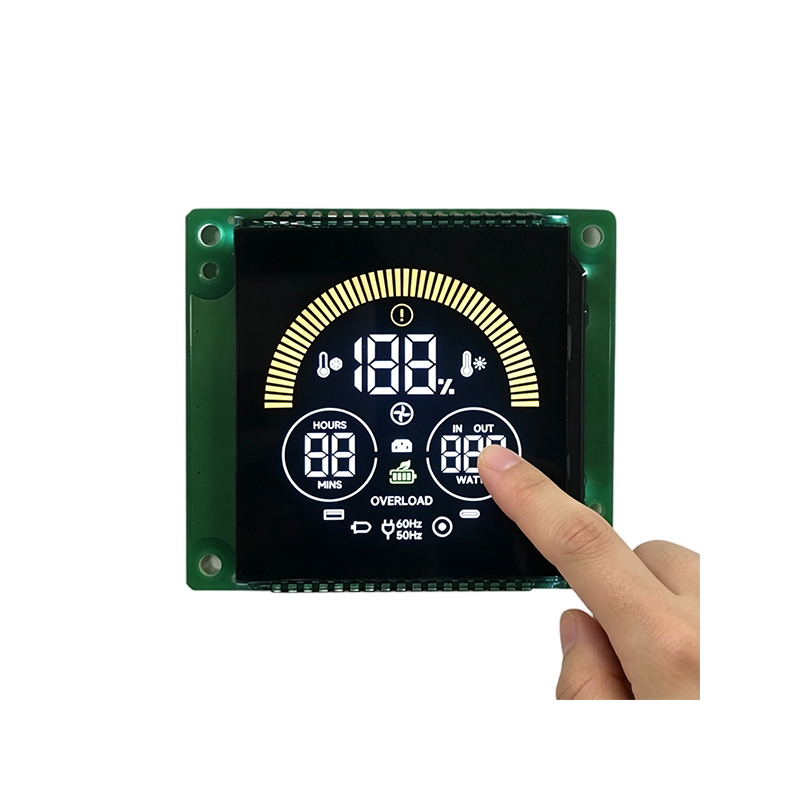
LCD segment displays operate by modulating light rather than emitting it. They require an ambient light source or a dedicated backlight to be visible. Their primary advantage lies in exceptionally low power consumption, making them the go-to choice for portable and battery-powered devices.
In 2026, reflective LCDs with integrated front lights are becoming increasingly popular for smart home thermostats and wearable health monitors, balancing readability with energy constraints. Meeting this growing demand for tailored solutions, Dalian Eastern Display Co., Ltd. has established two advanced manufacturing facilities in Dalian and Dongguan. Equipped with professional production lines and industrial-grade technology, the company specializes in producing a comprehensive range of monochrome LCD screens and modules. With a track record of designing and manufacturing over 10,000 unique products—including segment codes, character dot matrices, graphic dot matrices, and TFT displays—they serve as a qualified supplier for many well-known manufacturers across home appliances, automotive electronics, medical equipment, and industrial instrumentation sectors. Their annual capacity reaches 50,000 square meters of LCD screens and 10 million display modules, offering robust OEM and ODM services to bring customized vision to life.
Although less common than in previous decades, VFDs still hold a niche in high-end audio equipment and specialized instrumentation. They produce a distinctive bright blue-green glow and offer superior contrast ratios.
VFDs are self-emissive like LEDs but provide a softer, more diffuse light that is easier on the eyes in dimly lit rooms. They are robust against temperature fluctuations but require higher operating voltages than standard logic-level LEDs.
Understanding the trade-offs between the two dominant technologies is crucial for engineering decisions. The following table outlines the key performance metrics engineers consider when specifying a digital segment display.
| Feature | LED Segment Display | LCD Segment Display |
|---|---|---|
| Light Source | Self-emissive (Active) | Reflective/Transmissive (Passive) |
| Power Consumption | Moderate to High | Extremely Low |
| Viewing Angle | Wide (>120 degrees) | Limited (depends on polarization) |
| Operating Temperature | -40°C to +85°C (Typical) | 0°C to +50°C (Standard) |
| Response Time | Nanoseconds (Instant) | Milliseconds (Slight lag) |
| Cost Factor | Low to Moderate | Low (for standard shapes) |
| Best Use Case | Industrial, Automotive, Outdoor | Consumer Electronics, Wearables, Meters |
This comparison highlights that neither technology is universally superior; the optimal choice depends entirely on the environmental constraints and power budget of the specific project.
The versatility of the digital segment display ensures its presence in diverse sectors. From heavy industry to consumer gadgets, these components provide the critical interface between machine data and human operators.
In factory settings, reliability is non-negotiable. LED segment displays are extensively used in PLC (Programmable Logic Controller) interfaces, variable frequency drives, and sensor readouts. Their ability to remain visible amidst dust, oil, and varying lighting conditions makes them indispensable.
Operators rely on these displays for immediate feedback on machine status, error codes, and process variables. The high contrast of red or green LEDs allows for quick status assessment from a distance, enhancing safety protocols on the shop floor.
Microwaves, washing machines, and air conditioners frequently utilize segment displays to show timers, temperatures, and cycle stages. Here, the trend is shifting toward customized LCD segments that blend seamlessly with the appliance’s aesthetic design.
Modern smart thermostats often combine segment displays with touch interfaces. The segment portion provides a clear, always-on indication of the set temperature, ensuring usability even if the main touchscreen dims to save power.
Despite the rise of full-color TFT screens, segment displays remain prevalent in vehicle dashboards for critical information like speed limits, gear selection, and fuel levels. Their instant readability and resistance to sunlight glare are safety-critical features.
Automotive-grade units undergo rigorous testing for vibration and thermal cycling. Red and amber LEDs are preferred for night driving to minimize eye strain, while white segments are used for daytime clarity.
Precision is vital in medical equipment such as infusion pumps, patient monitors, and diagnostic tools. Segment displays provide unambiguous numeric data, reducing the risk of misreading critical dosage or vital sign information.
In these applications, cleanliness and sterilization compatibility are also considered. Sealed LED segment modules prevent fluid ingress, meeting strict hygiene standards required in clinical environments.
Selecting the appropriate component involves a systematic evaluation of your project requirements. Engineers should follow a structured approach to ensure compatibility and long-term performance.
Following this logical flow prevents costly redesigns later in the development cycle. It ensures the selected digital segment display aligns perfectly with both functional and commercial goals.
While segment displays are ubiquitous, they are not suitable for every scenario. A balanced view of their strengths and weaknesses helps in making informed design choices.
Industry experts recommend segment displays when the primary goal is conveying specific, repetitive data points efficiently. For dynamic content or rich media, other display technologies should be considered.
As we move through 2026, the digital segment display market is evolving rather than disappearing. Innovations are focusing on integration, efficiency, and enhanced user interaction.
Modern segment modules are increasingly featuring built-in drivers with I2C or SPI interfaces, simplifying connectivity with IoT microcontrollers. This reduces the component count on PCBs and streamlines firmware development.
Smart segmentation allows for dynamic brightness adjustment based on ambient light sensors, optimizing power usage without sacrificing readability. This adaptive capability is becoming a standard expectation in premium consumer devices.
Advancements in manufacturing are enabling smaller pitch segments and flexible substrate options. This allows designers to curve displays around cylindrical objects or fit them into increasingly compact wearables.
The convergence of traditional segment reliability with modern form factors ensures these displays will remain relevant in next-generation electronics, bridging the gap between analog feel and digital precision.
In a common anode display, all the anodes of the LEDs are connected together to a positive voltage source, and segments are lit by grounding the respective cathodes. Conversely, in a common cathode display, all cathodes are connected to ground, and segments are lit by applying a positive voltage to the anodes. The choice depends on the logic level of your driving circuit.
Standard 7-segment displays can show a limited subset of uppercase letters (like A, b, C, d, E, F). For full alphanumeric capability, 14-segment or 16-segment displays are required. These additional segments allow for the formation of curves and diagonals necessary for distinct letter recognition.
The primary factor affecting LED lifespan is heat and current. Operating the display within its specified forward current limits is essential. Using pulse-width modulation (PWM) for brightness control rather than constant high current can also reduce thermal stress. Ensuring adequate ventilation in the enclosure further prolongs operational life.
LED segment displays generally excel in direct sunlight due to their high luminance output. Reflective LCDs also perform well in bright conditions as they utilize ambient light. However, transmissive LCDs without strong backlights may suffer from washout in intense solar exposure.
For static displays, the concept of refresh rate is less critical than for video screens. However, in multiplexed driving schemes, a refresh rate of at least 60Hz to 100Hz is standard to prevent visible flicker to the human eye. LEDs respond almost instantly, while LCDs have slower transition times but do not flicker in static modes.
The digital segment display remains a cornerstone of electronic visualization in 2026, offering an unmatched balance of clarity, reliability, and cost-efficiency. Whether utilizing high-brightness LEDs for industrial ruggedness or low-power LCDs for portable convenience, these devices continue to serve critical roles across global industries.
For engineers and product managers, the key takeaway is to match the display technology strictly to the environmental and power constraints of the application. Avoid over-engineering with complex graphical screens when a simple, robust segment display suffices. This approach not only reduces costs but often enhances user experience through focused information delivery.
Who should use this technology? Ideally, teams developing industrial controllers, consumer appliances, automotive dashboards, and medical instruments should prioritize segment displays for numeric and status data. If your project demands long-term stability and instant readability, this is the proven solution.
To proceed, evaluate your specific lighting and power requirements against the comparison data provided above. Select a reputable supplier that offers comprehensive technical support and ensures component availability for the lifecycle of your product. Making an informed choice today guarantees reliable performance for years to come.