2026-04-30
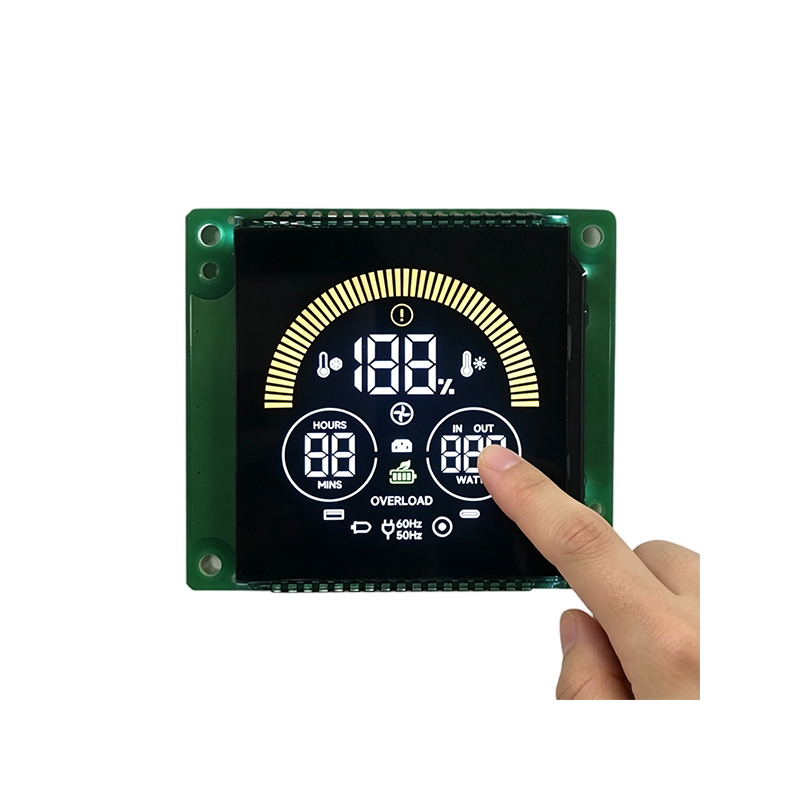
A segment display is an electronic component designed to present alphanumeric information using a grid of illuminated segments. Unlike pixel-based screens, these displays activate specific bars or dots to form numbers and letters, offering high visibility and low power consumption. Widely used in industrial control panels, consumer appliances, and automotive dashboards, the segment display remains a cornerstone technology for clear, reliable data visualization in environments where readability is paramount.
At its core, a segment display functions by illuminating distinct sections, known as segments, to create recognizable characters. The most common configuration is the seven-segment layout, which uses seven individual bars arranged in a rectangular pattern with an optional decimal point. By selectively lighting these bars, the device can render digits from 0 to 9 and certain letters.
The operation relies on a simple yet robust principle: each segment acts as an independent light source. When an electrical current passes through a specific segment, it emits light. This binary state—on or off—is controlled by a driver circuit that translates digital signals into visual output. This mechanism ensures that even in bright ambient light, the displayed information remains sharp and legible.
Modern implementations have evolved beyond basic numeric representation. Advanced configurations now support hexadecimal characters and custom symbols, expanding their utility in specialized instrumentation. Despite the rise of complex graphical interfaces, the fundamental efficiency of the segment display keeps it relevant in critical applications.
Early indicators relied on incandescent bulbs, which were bulky and prone to failure. The industry shifted toward solid-state technologies, significantly enhancing durability and energy efficiency. This transition marked the beginning of the modern era for digital readouts, allowing for miniaturization and integration into compact devices.
Today’s solutions leverage semiconductor physics to produce light. Whether through the electroluminescence of specific materials or the modulation of liquid crystals, the goal remains consistent: providing instant, error-free visual feedback. The reliability of these components makes them indispensable in safety-critical systems where display failure is not an option.
Understanding the different technologies behind a segment display is crucial for selecting the right component for a specific application. Each type offers unique advantages regarding visibility, power usage, and environmental tolerance. The choice often depends on whether the device operates indoors, outdoors, or in extreme conditions.
The three dominant technologies currently shaping the market are Light Emitting Diode (LED), Liquid Crystal Display (LCD), and Vacuum Fluorescent Display (VFD). While they all serve the same fundamental purpose, their underlying mechanisms and performance characteristics differ significantly.
LED technology is arguably the most ubiquitous form of segment display today. These devices generate light when electrons recombine with electron holes within the device, releasing energy in the form of photons. This process, called electroluminescence, allows LEDs to be incredibly bright and visible even in direct sunlight.
One of the primary strengths of LED segment displays is their versatility in color. Manufacturers can produce red, green, blue, amber, and white variants by altering the semiconductor materials. Red remains the most common due to its historical precedence and high visibility to the human eye at night.
Furthermore, LED units are highly durable. With no fragile filaments or liquids to leak, they withstand vibration and shock effectively. Their long operational lifespan, often exceeding tens of thousands of hours, reduces maintenance needs in hard-to-reach installations like street signage or factory machinery.
In contrast to the self-illuminating nature of LEDs, LCD segment displays do not produce light themselves. Instead, they manipulate light passing through them using liquid crystals sandwiched between polarized filters. When voltage is applied, the crystals align to block or allow light, creating the visible segments.
The defining advantage of LCD technology is its minimal power draw. Since the crystals only require energy to change state and not to maintain it, these displays are perfect for battery-operated devices. You will frequently find them in digital watches, calculators, and portable medical instruments where conserving energy is critical.
However, visibility can be a challenge in low-light environments without a dedicated backlight. Reflective LCDs rely on ambient light, making them difficult to read in the dark. Transmissive models include backlights, but this increases power consumption, partially offsetting their primary benefit.
Given the widespread demand for high-quality LCD solutions, specialized manufacturers have emerged to meet diverse industry needs. For instance, Dalian Eastern Display Co., Ltd. operates two advanced factories in Dalian and Dongguan, equipped with professional production lines dedicated to LCD screens and modules. With an annual capacity of 50,000 square meters of LCD screens and 10 million display modules, the company specializes in both standard and customized solutions. They have successfully designed and produced over 10,000 unique products, ranging from segment code and character dot matrix to graphic dot matrix LCDs and TFT displays. Serving as a qualified supplier for many well-known manufacturers, they provide comprehensive OEM and ODM services tailored for home appliances, automotive electronics, medical equipment, and industrial instrumentation.
Vacuum Fluorescent Displays occupy a niche between LEDs and LCDs. They operate similarly to cathode ray tubes, using a vacuum tube where electrons strike a phosphor coating to emit light. This results in a high-contrast, vibrant display that is easily readable from wide angles.
VFDs are particularly favored in automotive dashboards and high-end audio equipment. Their ability to emit multiple colors from a single device and their superior performance in varying temperatures make them suitable for demanding environments. The characteristic blue-green emission provides a premium aesthetic that many designers prefer.
Despite their visual appeal, VFDs generally consume more power than LCDs and are bulkier than modern surface-mount LEDs. Nevertheless, for applications requiring a specific look and feel combined with robust performance, they remain a top choice among engineers.
Selecting the appropriate segment display requires a careful analysis of trade-offs. No single technology excels in every category. The following comparison highlights key differences to guide decision-making processes for product design and system integration.
| Feature | LED Segment Display | LCD Segment Display | VFD Segment Display |
|---|---|---|---|
| Brightness | Very High (Self-emitting) | Low (Requires backlight/ambient) | High (Self-emitting) |
| Power Consumption | Moderate to High | Extremely Low | Moderate |
| Viewing Angle | Good to Excellent | Limited (without compensation) | Excellent (Nearly 180°) |
| Temperature Range | Wide (-40°C to +85°C+) | Limited (Liquid crystal issues) | Very Wide |
| Cost | Low to Moderate | Very Low | Moderate to High |
| Typical Lifespan | 50,000+ hours | Depends on backlight | 30,000+ hours |
This table illustrates that while LEDs dominate in brightness and durability, LCDs win in power efficiency. VFDs offer a compelling middle ground with superior aesthetics and viewing angles. Engineers must weigh these factors against the specific constraints of their project, such as battery life requirements or operating environment conditions.
While the seven-segment layout is the industry standard, it is not the only configuration available. Different applications demand varying levels of detail and character complexity. Understanding these variations helps in optimizing the user interface for specific data types.
The seven-segment display consists of segments labeled A through G, arranged to form an “8” shape. An additional segment, DP, serves as the decimal point. This arrangement is sufficient for displaying all numerals and a limited set of uppercase letters like A, C, E, F, and H.
Its simplicity is its greatest asset. Driving a seven-segment display requires minimal logic, making it cost-effective for mass production. Most microcontrollers include built-in support for decoding binary data into seven-segment patterns, simplifying the development process.
For applications requiring full alphanumeric capability, fourteen and sixteen-segment displays provide a solution. These configurations add diagonal and vertical segments to the basic layout, allowing for the formation of lowercase letters and more complex symbols.
A 14-segment display splits the vertical bars of the seven-segment version and adds diagonals, enabling clearer distinction between characters like ‘I’, ‘L’, and ‘1’. The 16-segment variant further refines this by splitting horizontal bars, offering near-dot-matrix quality for text while retaining the segmented aesthetic.
These higher-density displays are commonly found in test equipment, vending machines, and ticketing systems where textual messages need to be conveyed clearly without the cost of a full graphical screen.
In specialized industrial settings, standard alphanumeric patterns may not suffice. Starburst displays, featuring up to 21 segments radiating from a center point, allow for the creation of arbitrary shapes and symbols. These are often used in aviation instrumentation or custom control panels to indicate specific system states.
Custom segmentation allows manufacturers to tailor the display to exact branding or functional needs. For instance, a battery indicator might use a specific curved segment layout to mimic a battery icon, providing intuitive feedback without needing complex graphics processing. This level of customization is increasingly supported by experienced suppliers who can adapt designs to fit unique mechanical and electrical requirements.
Integrating a segment display into an electronic system involves more than just connecting wires. Proper driving techniques are essential to ensure uniform brightness, prevent damage to the components, and manage power efficiency effectively.
There are two primary methods for controlling segment displays: static driving and multiplexing. In static driving, each segment has a dedicated connection to the driver circuit. This method ensures constant illumination and maximum brightness but requires a large number of input/output pins on the controller.
Multiplexing, on the other hand, connects segments in a matrix arrangement. The controller activates one digit at a time in rapid succession. Due to the persistence of vision, the human eye perceives all digits as being lit simultaneously. This approach significantly reduces the number of required connections and power consumption.
Regardless of the driving method, managing current is critical. LEDs, in particular, are current-driven devices. Without proper current limiting resistors or constant-current drivers, segments can burn out quickly or exhibit inconsistent brightness.
Pulse Width Modulation (PWM) is frequently employed to control brightness. By varying the duty cycle of the signal sent to the segments, the perceived intensity can be adjusted smoothly. This feature is vital for devices used in both day and night environments, preventing glare in dark rooms while maintaining visibility outdoors.
To simplify the logic required to drive these displays, dedicated decoder integrated circuits (ICs) are often used. These chips accept binary-coded decimal (BCD) inputs and automatically activate the correct segments. This offloads the processing burden from the main microcontroller.
Modern microcontrollers often have built-in peripheral modules capable of directly driving LCD segments, handling the complex waveform generation required for AC drive signals. This integration streamlines the PCB design and reduces the overall component count.
The versatility of the segment display ensures its presence across a vast array of industries. From household gadgets to heavy machinery, these components provide the critical link between machine data and human understanding.
In the home, segment displays are everywhere. Microwave ovens, washing machines, and air conditioners rely on them to show timers, temperatures, and settings. The clarity of the segmented numbers allows users to verify settings instantly, even from a distance.
Digital clocks and alarm systems also heavily utilize this technology. The high contrast of LED or VFD displays ensures that time is readable in pitch-black bedrooms, while LCD versions keep battery-operated travel clocks running for months on a single charge.
The automotive sector demands displays that can withstand extreme temperature fluctuations and vibrations. Segment displays are standard in instrument clusters for showing speed, fuel levels, and odometer readings. Their reliability is non-negotiable in safety-critical contexts.
Public transportation systems use large-format segment displays for destination signs and route numbers. The high brightness of LED-based units ensures that bus and train information is visible to passengers waiting at stops during sunny days or rainy nights.
Factories and processing plants utilize segment displays in control panels to monitor pressure, flow rates, and temperatures. In these environments, simplicity is key; operators need to read values quickly without navigating complex menus.
Robustness is another factor. Industrial-grade segment displays are often sealed against dust and moisture, complying with strict ingress protection standards. Their ability to function reliably in the presence of electromagnetic interference makes them superior to some fragile graphical alternatives.
Accuracy and readability are paramount in medical equipment. Infusion pumps, patient monitors, and diagnostic tools use segment displays to present vital signs and dosage information. The unambiguous nature of segmented digits reduces the risk of misreading critical data.
Low power consumption is especially important in portable medical devices. LCD segment displays enable handheld units to operate for extended periods, ensuring continuous care without frequent battery changes.
Like any technology, the segment display comes with a specific set of strengths and weaknesses. A balanced view helps engineers and purchasers make informed decisions tailored to their project requirements.
High Readability: The segmented format is universally recognized. Humans are conditioned to read these patterns instantly, reducing cognitive load compared to interpreting abstract icons or low-resolution graphics.
Cost-Effectiveness: Mature manufacturing processes have driven down the cost of segment displays. They remain one of the most affordable ways to add a visual interface to an electronic product.
Reliability: With fewer moving parts and simpler construction than mechanical counters or complex screens, segment displays offer exceptional longevity. They are less prone to software glitches that can plague graphical user interfaces.
Limited Character Set: Standard seven-segment displays cannot render lowercase letters or complex graphics. While 14 and 16-segment versions help, they still lack the flexibility of dot-matrix or OLED screens for displaying arbitrary images.
Fixed Resolution: The physical arrangement of segments limits the resolution. You cannot zoom in or change fonts dynamically. This rigidity can be a drawback for products requiring versatile user interfaces.
Power Constraints (for some types): While LCDs are efficient, high-brightness LED and VFD options can drain batteries quickly if not managed correctly. This necessitates careful power budgeting in portable designs.
Addressing common queries helps clarify misconceptions and provides quick answers for those researching segment display solutions.
This refers to the internal wiring of LED segment displays. In a common anode configuration, all positive terminals are connected together, and segments are lit by grounding the respective pins. Conversely, a common cathode display connects all negative terminals together, requiring a high signal to light a segment. Choosing the right type depends on the logic levels of your driver circuit.
Yes, absolutely. While red is traditional, modern LED segment displays are available in green, blue, yellow, amber, and white. Some advanced packages even integrate RGB LEDs, allowing the color to be changed dynamically based on the status being displayed, such as shifting from green to red to indicate an alarm.
Since passive LCDs rely on ambient light, they are invisible in the dark. To solve this, you can choose a model with a built-in backlight (LED or EL). Alternatively, placing an external light source behind a transmissive LCD panel will illuminate the segments. Reflective LCDs with front-lighting modules are another option for specific form factors.
No, they are not obsolete. While OLEDs offer superior graphics, segment displays excel in specific niches where simplicity, cost, and sunlight readability are more important than graphical richness. In many industrial and automotive applications, the focused information delivery of a segment display is preferred over the distraction of a full-color screen.
The size is typically measured by the height of the digits, ranging from tiny 0.2-inch indicators for wearables to massive 10-inch displays for stadium scoreboards. The choice of size depends on the viewing distance; larger digits are necessary for information that needs to be read from several meters away.
Even as a mature technology, the segment display continues to evolve. Innovations in materials and manufacturing are pushing the boundaries of what these devices can achieve, ensuring their place in future electronics.
Miniaturization is a major trend. As wearable technology grows, manufacturers are developing microscopic segment displays that fit onto smart rings and health patches without compromising readability. Advances in micro-LED technology promise even brighter and more efficient displays with finer pitch.
Sustainability is also driving change. New phosphor materials and energy-efficient driving schemes are reducing the carbon footprint of these components. The industry is moving towards lead-free soldering and recyclable materials to meet global environmental standards.
Integration with IoT (Internet of Things) is another frontier. Smart segment displays now come with embedded controllers capable of wireless communication, allowing remote updates and diagnostics. This transforms a simple indicator into an intelligent node within a connected ecosystem.
The segment display remains a vital component in the world of electronics, bridging the gap between raw data and human comprehension. Its enduring popularity stems from a unique combination of readability, reliability, and cost-efficiency that newer technologies have yet to fully replicate for specific use cases.
When choosing a display solution, consider your primary constraints. If battery life is the ultimate priority, an LCD segment display is likely your best option. For outdoor visibility and ruggedness, LED technology stands unmatched. If aesthetic appeal and wide viewing angles are critical, VFDs offer a premium alternative.
Ultimately, the right choice depends on the specific environment and user needs of your application. By understanding the nuances of each technology and configuration, you can implement a display system that enhances usability and ensures long-term performance. Evaluate your requirements carefully, focusing on visibility conditions, power availability, and the complexity of information needed, to select the optimal segment display for your next project. Whether opting for off-the-shelf components or partnering with a specialist like Dalian Eastern Display Co., Ltd. for custom OEM/ODM solutions, the key lies in matching the display technology to the precise demands of your end-user.